Thursday, December 1, 2011

ENTRY OF MULTIBRAND RETAIL IN INDIA:- A WRONG DECISION OR AN INNOVATIVE STEP


Well, now a days, the 51% FDI is a hot topic all over India. It is effecting everybody's life. There are a lot of gossips among all kind of people about the hottest topic. Economists,general people, NEWS Channels as well as polititions are taking their warm interest in this topic. I think, if this contineus, than that day is not so far when the peoples like Anna Hazaare will make another protest against it even if he don't know anything about the matter. This is call India, where social person's aim is to disturb common peoples life by protesting on public places and passing their time, politition's aim is to oppose decisions of ruling party, even it is in favour of country, NEWS Channel aim is to make small films of such matters and present in front of audience for high TRP and we peoples waste our valueable times by involving in such matters.

Now, come on the topic.We are discussing on FDI in retail which means the entry pass of multibrand retail in Indian market.So, will it in favour in country or not. Before coming to a decision, I am going to Point out some vital topics which can be efficient to make a decision.

What is Retail ?

In general terms, Retail consists of the sale of physical goods or merchandise from a fixed location, such as a department store, boutique or kiosk, or by mail, in small or individual lots for direct consumption by the purchaser.

Retail in India :-

In india, the retailing concept arrived one decade ago. within a very few time, it became a part of everybody's life. Now a day's we wish to purchase almost all of our daily use articles to valuable goods from a retail outlet. It provide us a huge range and indipendencs purchasing. Metros as well as small cities are also a better place for retail. There are a lot of companies involved in retail merketing.

Major Companies in Retail In India:-

1)Future Group, 2)Bharti Retail. 3)Arvind Retail. 4)Birla Group. 5)ITC Retail. 6)Haryali Kisaan Bazar.7)Vishal Mega Mart.

The Retail MNC's which are expected to enter in Indian Market After 51% FDI :- 1)TESCO, 2)Carrefour, 3) Wal-Mart (WITH FULL POWER).

The Benifits Due to Multi Brand Retail in India :-A) Benifits to Customers :-
1) Cheaper Goods :- The supermarts and hypermarts reduces the involvment of middlemans like distributor, agents,brokers and their profit parts that caused the less cost of merchandise. Because, these companies will purchase goods directly from manufacturer or farmers. As the result, the merchandise will get avilabe on relativly less price.

2) More Avilability of International Brands :- A lot of international brands like- tesco products, john ferida, alberto Vo5, unilever will be easily avilable in India which are not avilable at present.

3) A Huge Range of Products :- There was a time, when customers went to a local store and ask the storekeeper to show their products. But the varities were very less and the storekeeper won't show more samples. But, now a days, customers want to see a plenty of varities for their selection. So, the entry of hypermarts will boost up the buying habbits of customers.

4) Pre Sale and After Sale Services :- there stores will provide more pre and after sale services.

5) Avilability of Pure Goods :- It is a major concern. Most of the existing retail organisations imports goods from overseas. For reducing costs they imports either out of fashion or stock lots of those countries. But imazine, if those companies directly entred in Indian market, then what will happan. Definetly we will get the pure goods.


B) Benifits to Country :-

1)Revenue generation :-The entry of multibrand retail will lead to increase the national revenue within very short time and India become a super power.

2)More Benifit to rural peoples :- There will be a tremendus benifit to rural people specially farmers. Because these stores will directly purchase food products from them.

3)A New Hope for Small and Cottage Industries :- Small and cottages industries will also get benifited from this.

4) A right step towards making India a developed country.


Now comes on the Demerits of Entry of Multibrand Retail in India :-

1) It will reduced the involvement of middlemans from the market. But that is also in the favour of the customers, because these middlemans charges unlimited commissions, profits and other compensations to reached the goods from manufactrer to customer.


So, that's all about the analysis of multibrand retail in India. So, now it's your turn think upon the matter and come up with your views.


For the behalf of The World of FMCG, I Pravin Tripathi want your replies.

Thanks

Wednesday, August 24, 2011

INDIA RETAIL FORUM 2011 :- INDIA'S BIGGEST EVENT FOR RETAILERS.


OVER 3000 PARTICIPANTS, 100 EXHIBITORS AND
200 SPEAKERS AT INDIA RETAIL FORUM


India Retail Forum (IRF) is a congregation of the most innovative and successful retail brands, companies and minds from across the globe and the entire retail support universe, including retail real estate, design & architecture, merchandise & services, visual merchandising, security and technology.

The 2011 edition of IRF will be modelled on the theme “Shopping for Retail Success” as modern retail in India poises for real, sustainable growth. The retail industry in India has gone through several orientations and readjustments since the advent of modernisation approximately six years ago. After the initial years of reckless expansion and hard lessons, it’s time now to train our sights on building retail businesses that are relevant, successful and enduring.

IRF 2011 will also debate and conclude on key issues and challenges facing the future of Indian retail. What is the role of modern retail in driving consumption? How did some retailers grow at their fastest during the most difficult economic phases? Is the growth sustainable? Who is responsible for developing retail infrastructure? What would be the smartest strategies for global players to effect success in India? How can small retailers be involved and engaged in the overall retail growth story?

The forum will bring to the participants an opportunity to learn, share and evolve with the masters in the business, explore out–of–the–box ideas, witness innovation in merchandise, spaces, IT and support systems, and celebrate outstanding achievements in the business of retail in India.

The ‘Mecca’ for retail captains and policy makers, IRF is a ‘must attend’ for all businesses wanting to connect with the lucrative–but–complex Indian market and her consumers.


Monday, July 25, 2011

The Store Replacement Plans of Bata in India.


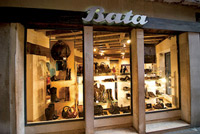
In what seems to be Bata’s exit plan for the low end market, the shoe giant will be introducing four new designs everyday and plans to open 70-100 stores with a built up area of 5000 sq. ft. every year. The decision is based on rising demand in the middle range segment. In the past few years, Bata has been pursuing an exhaustive clean up strategy in India. The Switzerland based company has shutdown close to 400 unviable stores and replaced them with 270 large format stores. Bata, which sells in 315 towns, has seen a phenomenal growth in online sales which have grown 200% in the 2010 alone. In fact, the efforts have started paying off as the company which was supposedly doomed has been delivering formidable financial results. Bata recorded net profits of Rs.34.39 crore in the fourth quarter of CY 2010, an increase of 35.39% compared to the same period last year. With competition in the form of cheap leather imports from China constantly on the rise, the current strategic outlook will act as a much needed cushion for Bata.

Saturday, July 16, 2011

Tryvertising :- A Vital Part of Modern Advertising


Tyvertising :- TRYVERTISING is all about consumers becoming familiar with new products by actually trying them out.

At present time, it is a major part of advertising. As the mall culture and retail era is increasing it's limit fron metro cities to small towns as well as semi urban areas, the role of tryvertising is a need of these kind of business. There was a time when brand name or a TVC of a particular brand was enough to sell that product. But now, the story is very different. At present time, people don't trust on any goods untill he or she personally try the product. The Tryvertising concept has been increased the need of trial rooms and sample products in retail outlets.

The Trivertising concept is based on Advertising but it is not based on same old TV adds or newspaper publicity of any unknown brand.The trivertising activities aimed directly at end users, as opposed to indirect, viral campaigns aimed at getting celebs or influencers to try out (and talk about) new products and brands.


The Vital Points of Trivertising :-

When it comes to TRYVERTISING, products that can be offered as an integrated experience will do well.It means the sample that present to the customer should be proper and best among all. Remember, first impression is the last impression.

As TRYVERTISING is not about old-school sampling, but about relevance, about real-world product placements, the most ideal audience is an audience with some time on his/her hands, or one that is actually looking for something to read, listen to, master, or figure out.

Trivertising depends on proper follow ups with latest updates of the goods avilable in the market.

The way of trivertising should be diffrent from others. It effects on the customer mindsets.

Monday, July 4, 2011

Indian Juice Market :- A new Battlefield.


The Days of 1990s are once again coming. This time it is in the same category but with another way. I am saying about the competition in soft drink market. In 1990s, when soft drink concept was new in India, one of Indian brand, Thumps Up leads the market. It was the biggest barrier in the path of Coca Cola to enter into Indian Market. As the result, Coke acquire the brand and continued the same under their flagship. At present time the same thing is going to happen in Indian juice market where the market is leaded by a Indian brand, Real juice.

The juice market in India is witnessing a plethora of activity. With the focus on a healthy diet, there has been an increase in demand for fresh fruit juices. According to data by Euromonitor, the soft drinks category in India, which includes bottled water, carbonates and concentrates, will see trade volumes grow at a CAGR of around 18.04% from 2007 onwards to reach around 9.98 billion litres in 2013. In comparison, the fruit and vegetable juices category, which includes 100% juices, juice drinks, fruit flavoured drinks and nectars; will see trade volume grow at a CAGR of 22.9% in the same period to reach 1.1 billion litres by 2013.

As far as the categories are concerned, juice drinks (upto 24% juices) will remain the largest market with trade volume of 868.9 million litres by 2013, followed by nectars (24-99% juices) at 184.5 million litres and and 100% juices at 46.2 million litres. In terms of market shares, the honours are split, although not so evenly. Dabur’s RĂ©al and Pepsi’s Tropicana dominate the 100% juice category with market shares of 48.3% and 42.8% respectively (Euromonitor). The large and traditional segment of juice drinks sees Coca Cola’s Maaza and Parle Agro’s Frooti as legacy leaders, with shares of 37.9% and 33% respectively.

Coca Cola’s market movements provide valuable indications on the overall trends. It does seem that the 100% juice category is one where players perceive a lot of potential ostensibly because of the ‘pure’ proposition, and Coca Cola’s launch demonstrates this.

So, these trends are showing that there will be a healthy competition in juice market in India. So, let's see what will going to happen.

Thursday, June 30, 2011

The Success Mantras of Retail Industry

Well well well, Now a day we are living in the world where everything is coming under the shade of retail industry. It is very modern concept and following by almost every country. At present time, people loves to go for big bazaar or spencer's for shopping of every articles even perishable goods in place of going to traditional mandis or other local market. From lifestyle goods to FMCG goods, everything has been came under retail industry. People are more habitual to retail stores.

As the demand of retail increasing,different stores of many companies are also opening day per day. But retail business is not an easy job. A number of retailing companies shut down every year. But the organisations which follows the major key mantra of retail business, are still market leaders.

There are lot of strategies available in different books of retail, but if we take a sincere look on the success strategies for retail business, we will find that there are only two major mantras on which whole retail process depends.

A) Perfect Outsourcing :- 1) Regular outsource.
2) Outsource of fresh and
different kind of products than local market.
3) More number of verities in different product
category.
4) Healthy inventory level.
5) Goods should be outsource from same vendor always.
6) Purchase department should be more active in
outsourcing of goods.

B)Excellent Supply Chain :-
1) Logistic department should be more active.
2) On time supply and dispatch.
3) Good co-ordination between transporter and
organization.
4) Regular follow up with cargo company.

Friday, June 24, 2011

The Presentation Concept in Retail Industry


Presentation is everithing in retail industry. It dosent matter that how goods is? it is right, wrong, small, large etc. main thing is that how it presented in front of customer. A nice presentation can lead to sale an unbrand product and at the same time without a proper presentation, a very nice and precious thing is looking like worthless. In retail, no need to convince a customer, if your product presentation is proper. The presentation describs all about the goods.

Major Ways of Presentation;-

1) Light Presentation :- Lights of different colors makes an impact on customer as well as it increase the get up of a product. Generally, customer attracts more by light and sound.


2) Sound Presentation :- Sounds refers to the music and songs. Generally, customer comes to the store after finishing his all the work, so at the time he/she becomes little bit tired. The music or song provides a customer little bit relief and entertain them. It convince a customer to pass more time in store.


3) Attractive Packing :- Packing of a product defines it’s value. Good and attractive packing mesmerizes the customer.


4) Placing :- Placing of good is a major part of presentation. It much matters that where the goods should be place, because first impression is last impression. So, put fresh arrival in front of entry of the store which can attract the customer standing outside the store. The most running items should kept in the interiors of the store so that a customer will have to pass the complete area and by doing that the retailer can focus every product to the customer. Also there are some products on which customer takes time in selection, so these products should be kept at the place where enough space is available.

5) Pricing :- Pricing is one of the most major factor which decides the success or failure of a product. In those days, pricing is also a part of presentation. Different kind of psychological pricing like Rs. 99, 199, 499, 999 or different criteria’s of discount works as means of presentation of product.

Monday, May 30, 2011

Product Life Cycle in Modern Era

Product Life Cycle, an important part of Marketing process is like a bio data of a product. It defines the total progress or failure of a particular product. There are lot of views about PLC. The ultimate view given by Kotler (the father of marketing),has been followed by almost every organization and research centers. But, if we compare traditional PLC with present market situations, we will find the there is a need of little bit modification in it. Let's see the comparative review of Traditional and modern PLC.

(A) Traditional Product Life Cycle :-

the traditional PLC contains four major stages in PLC.
1) Introduction
2) Growth
3) Maturity
4) Decline.

As clear from given points, the product introduced in the market after that it grow, then it's demand increase and it touches the maturity label and finally it declines from it's position in the market.


(B) Modern Product Life Cycle :-

In the modern Product Life Cycle, there are only three stages.
1)Introduction.
2)Peck Point.
3)Existence/Replacement.

It is the life cycle of a product in modern era. It introduce and within very short time, it touches the peck point due to more demand, but very soon it declines and exist from the market. Fresh arrived Products of retail stores or stylish mobile handsets are perfect examples of modern Product Life Cycle.

More Examples :- Within one year (2010), Micromax mobile has been introduced as well as stopped more than 50 varieties of it's mobile handsets in Indian market.

Nokia's E-Series introduced at the begning of the year 2010 and it became a market gainer till mid of the year but at the end of the month, popularity of this product has been also end.

Bajaj has been introduced Discover 100 cc bike in the year 2010. It cover up almost total market within two months. But till end of September, company introduced the same bike in 150 cc


At present time, a fresh product have two qualities:-1) Quick Growth and 2)Quick decline.

there are several reasons for that nature of a product in modern era :-

1) Change in customer buying behavior.
2) Change in fashion in regular intervals.
3) Increase in number of competitor in every industry.
4) More availability of counter-products which effects the brand image of a product.
5) Replacement goods.

Saturday, May 21, 2011

5 Major Steps To Win The Market.


Market, the playground of any business. Here also two teams:- the buyer and the supplier. Like other games, it also needed strategies, plannings and directions for win the market. But there is one difference from other games is that, in other games, a fresh day there has been a fresh start. no relation with last game. But in the case of market, it is little bit different. Here, the success of fresh day depends upon the work done on last day. If you done well today, it will be accelerate your next day. Like that there are a lot of things which plays a key factor in winning the market. Let see the major factors for winning a market.

Key Factors For Win The Market :-

1)Excellent Supply Chain System :-
It is found that a plenty of customers are unsatisfied with the delivery system of goods at the time. 90-95% has been lost due to poor delivery system. This is last process of sale but it is important among all. Everything (good product, well publicity, good quality,brand value)spoiled out when the goods, don't reached to the destination of buyer at time. this is the major problem for every organization at present time. But if anybody able to overcome this problem, he can win the market. So, the organizations should take more attentions on their supply chain system.

2) Provide Only True Information to Buyer About Product :-
This is again another major point where an organizations lost their loyal buyers. Sometimes, for promoting goods, we provides some wrong information's to buyers. This is terrible. Due to it, we can sale our goods only first time to buyer but this practice will lead to decline future sales.

3)Right Product at Right Place :-
A supplies should take care about this point. Because this is very true fact. Different peoples has different nature and buying habit, so it not means that a product which is best selling at a place will also have same result at other places. It is a major part of market research. Launch only suitable product at appropriate place. Don't sale microwave oven in rural areas.

4)First Come First Service :-
At present time, nobody wants to wait for anything. So, If you want to beat your competitor, you should introduce your your product before competitor. Market is totally first come first service.

5)The Market Gainer :-
Every time customer wants for something new. So, to satisfy the customer need and win the market a supplies should introduce a fresh product with others. The fresh may be something new or some old but which has not been shown to buyer last time. This product is called market gainer. Note, only one fresh product can lead to increase the sale of your old ones.

Sunday, March 13, 2011

India 2020:- It's Retail Retail Everywhere


The first time, when the father if Indian Retail, Mr. Kishor Biyani comes with his idea of Indian retailing, it was a huge landmark in Indian market. Biyani's Big Bazaar becomes a brand name in small cities as well as metros. At very beginning, the people treated it for their entertainment purpose. sometimes a huge variety of peoples came for just time pass. But time per time, the prospect ratio increased and now it is a need for the people of all cities. If in any city, Big bazaar's store is available, then customers first choice will be that. the easy availability of all articles at a place, quality of products, lack of time with people, make them addicted to these stores.

Now a days, the people of rural areas are also looking for such kind of retail stores. There are also some companies which are focusing on rural areas and quite successful. Hariyali Kisaan Bazaar, Vishal Mega Mart are among those companies which are best sellers in rural areas. The attractive outlets, modern technology and cheeper prices of these stores attracts rural customers much more. This shows the future of retail in vast rural market of India where 70% of the population resides in rural areas.

The Indian Retail industry is not only depend on our domestic companies, but the MNCs are also entering or ready to enter in Indian market. In the year 2008, world's top company Walmart entered in Indian market with collaboration with Bharti. The biggest retail gaint of Europe, "Carrefour" also set up it's first outlet in India. Apart from these, there are also a plenty of companies are planning to entered in Indian market. This shows the future of Indian retail.

So, what will happen after 2020, Will retail retail everywhere. It will be quite good for customers but at the same time, it will directly hit wholesale market as well as major manufacturing giants. Because, day per day, the counter-fights between the branded products and the own products of these stores increasing.

The Overview of Indian Retail Market:-

Total Market size :- US$ 392.63 billion in 2011
Expected Size :- US$ 674.37 billion by 2014

Driven by the growth of organised retail coupled with changing consumer habits, food retail sector in India is set to be more than double to US$ 150 billion by 2025, according to a report by KPMG.

ndia has been ranked as the third most attractive nation for retail investment among 30 emerging markets by the US-based global management consulting firm, A T Kearney in its 9th annual Global Retail Development Index (GRDI) 2010.

Foreign direct investment (FDI) inflows between April 2000 and October 2010, in single-brand retail trading, stood at US$ 197.04 million, according to the Department of Industrial Policy and Promotion (DIPP).

Carrefour, the world’s second-largest retailer, has opened its first cash-and-carry store in India in New Delhi. Germany-based wholesale company Metro Cash & Carry (MCC) opened its second wholesale centre at Uppal in Hyderabad, taking to its number to six in the country.

Electronic retail chain major, Next Retail India, plans to open 400 showrooms across the country during January-March 2011 increasing the total number of retail stores to 1,000 by the end of the fiscal year 2010-11.

Jewellery retail store chain Tanishq plans to open 15 new retail stores in various parts of the country in the 2011-12 fiscal.

V Mart Retail Ltd, a medium-sized hypermarket format retail chain, is set to open 40 outlets over the next three years, starting with 13 stores in 2011, in Tier-II and Tier-III cities.

Reliance Retail, the wholly owned subsidiary of Mukesh Ambani's Reliance Industries, is set to open 150 stores by the end of March 2011 and double the number of stores across the country in all formats within five years.
Future Value Retail, a Future Group venture, will take its hypermarket chain Big Bazaar to smaller cities of Andhra Pradesh, with an investment of around US$ 1.54 million to US$ 4.41 million depending on the size and format.
RPG-owned Spencer's Retail plans to set up 15-20 new stores in the country in 2011-12.


Spar Hypermarkets, the global food retailing chain of the Dubai-based Landmark Group, expects to start funding its India expansion beyond 2013 out of its local cash flow in the country. So far, the Landmark Group has invested US$ 51.31 million in setting up five hypermarkets and plans to pump in another US$ 51.31 million into the next phase of expansion.

Leading watchmaker Titan Industries Limited plans to invest about US$ 21.83 million for opening 50 premium watch outlets Helios in next five years to attain a sales target of US$ 87.31 million.

British high street retailer, Marks and Spencer (M&S) plans to significantly increase its retail presence in India, targetting 50 stores in the next three years.
Spain's Inditex, Europe's largest clothing retailer opened the first store of its flagship Zara brand in India in June 2010. It further plans to open a total of five Zara outlets in India.

Bharti Retail, owner of Easy Day store—supermarkets and hypermarts—plans to invest about US$ 2.5 billion over the next five years to add about 10 million sq ft of retail space in the country by then.

So, Now we can say that "IT'S RETAIL RETAIL EVERYWHERE" in India till 2020.

Saturday, March 5, 2011

A JOURNEY FROM "GERM FREE PEOPLE TO GERM FREE TOILET"


Well well well, I am not going to describe the work or contribution of a political leader or social service professional.Rather it is the different activities of HUL. I am drawing your attention about HUL's different social and wale fare activities.

Last year, HUL comes with a social induction program known as "Healthy India" under it's flagship brand Lifeboy soap. In that program, the company was committing to make a germ free India and healthy people by using it's soap.The program was not a landmark success, but it was a good promotion for it's brand.

Now days, The company comes with another wale fare program called, "awareness about toilet hygiene" through it's flagship brand, 'Domex'. Under this program the company Aims to clean 2000 toilets across India within two weeks. As part of this campaign Domexhas launched a new TVC. The TVC hasa toll-free number on which viewers can call to requestforcleaning of any dirty toilet in their vicinity - be it apublic toilet at apark, school, or any other public place. The Domex-Squad,ateam for implementing this hygiene drive, is then activated and takes the responsibility of cleaning the toilet. The Domex-Squad will take down all the requests till February 28 th and the cleaning process is scheduled from March 15th to 31st.


This is the story of social services performed by India's No.1 FMCG company HUL. But if we deeply think about it, we will find that Really these are social service or just a modern approach of sampling and brand promotion? only consumers can give the answer of the question. But one thing is clear the HUL takes dual profit from these activities. One side, they collects a lot of good wishes from all every person due to their social activities and on the other side, they easily promote their products.

On the behalf of "The World of FMCG", I Pravin Tripathi wishing HUL a very good luck and thanks for their social services.

Thursday, March 3, 2011

Indian Railway :- It's Enough for IRCTC, it should be Changed.


Imagine, you are travelling in train and wants to have a tea or coffee, but finally you found the same testless tea/coffee of IRCTC. At the time, the whole enjoyment to take a taste of tea goes to vein, only frustration arises. It is not your own story, but it is the story of 15 million people who travels every day by different trains of Indian railway network.Everybody dissatisfy with the poor services of IRCTC. But nobody opposes because everybody ignores this due to only a mare journey. But is this a excuse? everytime we tolerate them due to journey. At the same time, we should think that it is not only our own matter but it is a matter of repudiation of out nation. Because, there are a lot of foreign tourists, travellers and other dignity prsons are also travells by these trains. So, why not our govt. looking upon this matter. If IRCTC is unable to provide best services, then there should be privatisation in catering division og railway. The catering authority should be given to private companies. As the result there will be dule benifit, One side, the passangers will get better services as well as the revenue of govt. also increases.

We are waiting to enjoy a taste of Costa Coffee or Georgia in trains replacing the tasteless tea of IRCTC. Because at the present time, passengers dont bother to carry a bag full with eateries and beverages, but they are expecting to a better service from railway pantry team. So, Railway should be meet ther commitments.

Sunday, February 6, 2011

Instant Noodle Market :- A New Battle Field For Top FMCG Players


There was a time in the early 90s when noodle market enters in India. At the time, it was very new concept for Indian people. So, many big players like HUL, ITC etc. didn't enterd in it. But it was Nestle , "A Good Food Good Life" India's top company of baby foods taken the big risk to entering in instannt noodle market. At the begning, it was very steady market and it seems like a flop decision for the company. But as the time passed, the eating habbit of Indian people going to change time to time. At early days, noodles used as a tiffin for children for their school. But it's concept changes time per time. Now days, noodles are most prefential food for youth generation as well as working class persons in metros. Sometimes peoples uses it as their lunch or dinner due to it's quick process and easy avilability.

Now a days, the total value of instant noodle market in India is Rs.1300 crore. There are more competition in this market and it is increasing year per year. The Rs 1,300-crore instant noodles market in India is in a state of war, with three new players having thrown their hats in the ring over the last one year. Who will win the battle for the consumer’s heart?

The year 2010 marked the end of the instant noodle market as we know it. For two decades, consumers had a single brand of noodles to dig into — Maggi — giving Nestle over 85 per cent share of the market. Players such as Indo-Nissin’s Top Ramen, Capital Foods’ Ching’s Secret and Smith & Jones and CG Foods’ Wai-Wai tried to make a dent but failed to take up more than 10-15 per cent of the Rs 1,300-crore market.

Now food companies seem to have woken up to the potential of the category growing at a consistent 20 per cent for the last few years. Three new entrants have thrown their hats into the ring over the last one year: Hindustan Unilever (HUL), GlaxoSmithKline (GSK) and ITC with Knorr Soupy Noodles, Horlicks Foodles and Sunfeast Yippee! respectively.

So, the entry of to FMCG players in noodle market shows that in the comeing years, the monopoly of Nestle from Indian noodle market will be in trouble. But one thing is clear that consumers will definetly enjoy a diffrent quality of teastes in noodles.

Wednesday, December 1, 2010

A DIFFERENT TEA WAR:-


The days of cold drinks are now coming to an end. Now the era of cold tea is entering into Indian market. In metro cities, more than 60%peoples preferred cold tea in place of cold drinks. So, why our cold drink majors are keep quite? That’s why major rivalries are entering in this segment. You are right thinking, I am talking about Coke India and PepsiCo. The both companies are entering into iced tea segment in India. But this time they are not alone, these companies are entering with joint ventures with other companies.
The world’s largest food company, Nestle shakes hands with the world’s largest beverage company Coca Cola with the name of Beverage Partners Worldwide (BPW). They launched their first ready to drink beverage, Nestea , in India. PepsiCo is not very far, they made a 50:50 joint venture with Tata Global Beverage in the arena of non-carbonated ready to drink health beverages with a mandate to do business globally. Add to this another joint venture for Lipton Iced tea, where PepsiCo has an alliance with unilever.
The auction begins against a backdrop where the health and wellness beverages category, which these three ventures target, is predicted to grow at 22 percent per year and reach Rs. 17350 crore by 2015, according to consulting company Tata Strategic Management Group. As BPW launched Nestea beginning with Mumbai, a market that it claims is the country’s largest for iced tea.
At the present time, one out of 10 customers visiting coffee chains ask for iced tea, the market is still niche and moving at a painfully slow pace, say rivals. According to experts, it is very tough category in India, because the Indian peoples are still looking for hot tea. But if you considers what the TSMG report says, “Yoghurt drinks, fruit juice, energy and sports drinks are likely to be the fastest growing beverage categories’, reaching eight time their aggregated current size by financial year 2015.”
The future is unpredictable, but one thing is very clear the we peoples will enjoy the different tastes of iced teas. On the behalf of THE WORLD OF FMCG, I Pravin Tripathi wishing COKE and PEPSICO a great luck.

Thursday, November 25, 2010

Namaste Europe

New Delhi, Nov 16, 2010: Dabur India Ltd today acquired 100% equity in NamastĂ© Laboratories LLC and its three subsidiary companies -- Hair Rejuvenation & Revitalization Nigeria Limited, Healing Hair Laboratories International, LLC, and Urban Laboratories International, LLC along with its South African arm – for $100 million, in an all-cash deal. This marks Dabur’s entry into the fast-growing $1.5-billion ethnic hair care products market in U.S., Europe and Africa.

“This acquisition is in line with our strategy to build a global presence in the international FMCG market,” Dabur India Ltd. Chairman Dr. Anand Burman said. “The NamastĂ© Group has a complementary product mix that can be easily integrated with Dabur and will also serve as a gateway to the US market for our portfolio of consumer products. This transaction will also enhance our profitability, increase stakeholder value and substantially add to Dabur’s already strong presence in Africa, serving as one of the key pillars in strengthening our competitive position in the African continent.”

The transaction is expected to be completed by the end of the 2010 calendar year, subject to regulatory approvals in the US. Mr. Gary Gardner, founder and CEO of NamastĂ©, along with the well experienced management team will continue to run the business as a wholly-owned subsidiary of Dermoviva Skin Essentials Inc -- a subsidiary of Dabur India Ltd. NamastĂ©’s North American sales team will also remain in place, and its existing relationships with retailers, wholesalers, distributors and suppliers will not change as a result of this transaction.

Founded in 1996 to fulfill the needs of the health-conscious consumers of African descent, NamastĂ© Laboratories offers a range of products developed with natural ingredients. NamastĂ© markets a portfolio of products under the Organic Root Stimulator® brand and is one of the leading marketers of hair and beauty products for women of colour. The company controls a 12% market share in the US and enjoys significant market positions in many countries in Africa, the Middle East, Europe and the Caribbean region of North America. It has a strong multi-channel distribution platform across the US in mass, retail, beauty stores and salons.

"We are very excited about this acquisition as it opens up new vistas for our burgeoning overseas business. This transaction will mark Dabur's entry into the hair care market in Africa and add to our already substantial and growing oral care and skin care business in the African continent,” Dabur India Ltd Group Director Mr. P. D. Narang said. “We expect this transaction to provide a tremendous platform for value creation in both the US and Africa. With this acquisition, nearly 25% of Dabur's consolidated revenue would be generated overseas.”

“Over the last few years, Dabur has been following a very disciplined and focused approach to identify acquisitions that represent a strong fit with our business,” Dabur India Ltd Chief Executive Officer Sunil Duggal said. “We have also developed strong processes to manage and integrate these acquisitions, as demonstrated in the successful integration of Balsara, Fem and Turkey's Hobi Kozmetik. We are confident that the opportunities for capitalizing on the strengths of NamastĂ©’s business across our international operations are significant.”

"The entire NamastĂ© management team is excited to be joining forces with Dabur," said NamastĂ© founder and CEO Gary Gardner. "In Dabur, we have found a strategic partner who will help realize our vision of becoming the hair care brand of choice for people of colour worldwide. With their presence in Africa, and with our knowledge of the consumer of African descent, we look forward to building a global presence rooted firmly on the African continent. We believe this partnership will thrive because the two companies complement each other so well and because there is a mutual respect. We know our employees, customers, distributors and retailers will benefit from this great growth opportunity.”

Now Taste Dabur Chyawanprash In Orange & Mango Flavours


In the biggest-ever innovation in the Chyawanprash market, Dabur India Ltd – India’s largest Ayurvedic and natural healthcare company – today launched its flagship healthcare brand Dabur Chyawanprash in two new fruit-flavoured variants – Dabur Chyawanprash Orange and Dabur Chyawanprash Mango flavours.

Dabur India Ltd has also roped in popular Bhojpuri cine star Ravi Kishan for consumer-connect and brand building initiatives for Dabur Chyawanprash. Ravi Kishan has been roped in to lead Dabur Chyawanprash’s effort in spreading awareness about need for immunity through its various below-the-line mass activities, like consumer contact programs, dealer meets etc, in Bihar and Uttar Pradesh.

“This marks two new firsts for Dabur Chyawanprash and for the healthcare industry in India. Consumers have always sworn by the health benefits of Dabur Chyawanprash and we are now offering the same immunity and health benefits of Dabur Chyawanprash in a tastier form with the launch of Orange and Mango flavours. This launch would go a long way in expanding the consumer base for this age-old health tonic,” said Dabur India Ltd Category Head-health Supplements Mr. Praveen Jaipuriar.

Friday, September 3, 2010

"INDIAN MARKET"- A TWO WAY CONCEPT

Now, we are going to make some study about the nature of Indian market. In a simple words we can say that the Indian market is a two way concept. For the same product there are several demands at different area. The major cause of it is Heterogeneity of Indian market. It is divided into two kind of market. 1)Rural Market and 2)Urban market. The nature and characteristic of both kind of market is very different from each other. One side, the customers of urban markets are looking for a good quality and brand name, but at the same time, the customers of semi-urban and rural areas are looking for a good quality in cheaper price. Due to such kind of heterogeneity of market, no any company can produce only one product in the market.

Proctor and Gamble,a leading FMCG company of world has changed his strategy to lead Indian Market. The very popular detergent brand "Tide" has been introduced by the company as compare to Surf Excel of HUL. But for leading the rural market, the company diversify it's product line and introduce a 200gm economy pack of this detergent at Rs. 10.This strategy makes the brand an all rounder. Now, it works effective in both formats of market as well as only one single brand of P&G has been able to compete all the economy and premium brands of HUL. This is called the dual concept of Indian market.

The Five Basic Questions asked by a rural customer in India:-

1)What is the price of the product?

2)Is there any free scheme with it?

3)Give me some more discount on MRP.

4)If the price of your product is same as the other branded product, than I will go for that product.

5)Good Packaging. ( Because they wants to use the empty packs for other use).


Five Basic Questions Asked By An Urban Customer:-

1)What is the company of the product?

2)Show me the contains?

3)Is it latest manufactured or not?

4)Is there any guarantee or warranty with the product?

5)Show me some latest manufactured.


This is all about the dual concept of Indian market. It is very difficult to make coordination between both the market, but the marketer who is able to make it will become the leader of market.

Example- Dabur Chyawanprash, Clinic Plus Shampoo, Tide Detergent, Hero Honda Motorbike, Vimal Garments, Reliance Telecommunication etc.

Saturday, August 21, 2010

THE TIME MARKETING

Time marketing is a very latest concept of marketing practice. In very simple words, the Time Marketing refers to "Introduced your Product, Before your Competitors". In the modern era, there is a lot of implementation of time marketing. Suppose, you are a marketer and you have develop a fine marketing plan, but due to any reason, same kind of product with same marketing plan, your competitor has been introduced in the market , then what will happens with you? At the time you have nothing to do. This is called time marketing.

Time marketing focus on open your mind with your eyes and ears, don't give a single chance to your competitor. There is also a reverse effect of time marketing. Time marketing not only suggest you to introduced your product before others but also it refers to wait for a suitable time for introduce your product. It depends on balancing of time in the field of marketing.

The implementation of time marketing is much more in film industry. They properly use time marketing before releasing their latest film. Like film industry, there are also many implementation of time marketing in all other industries.

In India, in the year 2003, coke has been introduced a 200ml bottle of coke for Rs. 5. It was a huge success for the company and increased the sale of the product. After some times, Coke's closest rival, Pepsi also introduced same in Rs. 5,but it was too late. Airtel introduced a scheme of life time connection in just Rs. 999. It was a very cheapest and save scheme for the customers at the time which turns a good job for the company, after several days,some other companies also introduced same scheme, but Airtel dominates the market. There are many stories like that which proves the value of time marketing in the market.

The Basic Mantras of Time Marketing:-

1) Wait for a suitable time for introduce your product.

2) Do your steps before your competitor.

3) Make a balance between time and introduction of product.

4)_Be a front foot player, not a back foot player.

Wednesday, August 4, 2010

TV COMMERCIALS : THE GOLDEN DAYS ARE GOING TO AN END.

There was a time, when TVC plays life blood for the advertising for a product. In 90'S The people wishes to watch TVC's with more eagerness. As the result, they coincidently keep in touch with the particular product. In 90's, people goes to the stores and demanded for any product by using the tagline given in the adds. Like- "Fevicol kaa joor hai, tootega nahi". Customer comes to the market by attracting from the lovely TVCs. We can't forgot the TVC of Dhara oil called "Jalevi". Like that there was a lot of popular advertises which creates a bigger impression on customer mind. Peop-le loves to watch the TVCs.

But as per there is a life cycle of anything, the life cycle of TVCs in India is comes to an end. Today the advanced technology and digital media makes the TVCs more attractive and modern, but the people hardly takes an interest in watching in such kind of TVCs. The plenty of TV channels and people's busyness is also a major reason behind it. Today, a common Pearson having a TV with a cable connection. So, he wants to utilized hi cable as much as possible. As the result, he don,t watch TVCs and change the channel at the time when advertise shown on T.V. It is a major problem facing by T.V media of advertising. But most of the major companies are not getting this point and they are spending much and much money on the TVCs, due to competition with rival which in not good for the point of view of company.

Reasons for the downfall of TVC's.:-

1) Plenty of availability of multi channels and different program's. People not take interest in watching the TVC's.

2) Extra busyness and less time with people.
3) Easy and cheaper availability of internet and relating devices.
4) Decline stage of advertising in India.
5) Other means of advertising are running effectively, like- canopy promotion, sales promotion, direct marketing.

6) Easy availability of any information related to the product on internet.
7) Repeating the same video many times a day.


So,The days of DD1 are gone. Now a days expending more on the TVC is just wasting money.So, major companies should take step on this point

Sunday, August 1, 2010

This is How HUL is No. 1


30 years has been past away, but the first choice of people of asking for Lux as their first preference as a toilet soap have not been changed. Today, when I get up in the morning and go to bathroom , I remember my childhood days after looking at same Pepsodent toothpaste. The brands of HUL is just like a regular brands of customers from age to age. Logos has been changed, packaging has been changed, but the choice of customer's has not been changed.

If we think about the reasons that why HUL is best in India in spite of huge competition, we will find that HUL is great because it is great, it's strategies are great, it's aggressive marketing is great and last but not least it is only Nitin Pranjape who remain it no. 1 today also.

I am not going to publish more statements or mesmerism words, I am just want to share some of great strategies of HUL and Pranjape.

In the time of 1990 when the concept of TV commercials was very new for the people, HUL dominates the market and published it's brands aggressively by TV commercials.
Some of the commercials like Liril soap, Lifeboy soap, Surf Detergent, etc. were the most lovable TVCs at the time. "Tandarusti kaa raksha karta hai Lifeboy" was the one of the favorite song of every child.

in 21st era, HUL comes with a different concept called canopy promotion which becomes a benchmark in advertising and sales promotion. Once again HUL become the market leader in all segments.

At the present time, according to great Pranjape, HUL is planning to sustainable production for it's all products. Right now HUL's products will define their own footprints.HUL products are manufactured in over 40 factories across India. Over 2000 suppliers and associates are involved in its operations. The giant HUL distribution network comprises of around 4000 redistribution stockists and 6.3 million retailer outlets. The wide-spread distribution network reaches almost entire urban India and around 250 million rural consumers. The HUL's products will be made after consider the environments. The super supply chain management and production system of HUL will be the idle for every company.

As a responsible corporation of the country, HUL has adopted the triple bottom-line approach to address environmental and social concerns. Following are the three key pillars in this approach:

PROSPERITY PEOPLE PLANET
(ECONOMIC) (SOCIAL) (ENVIRONMENTAL)

From the Behalf of The World of FMCG, I Pravin Tripathi wishing a good luck to HUL